

Academic Experts
Academic Experts
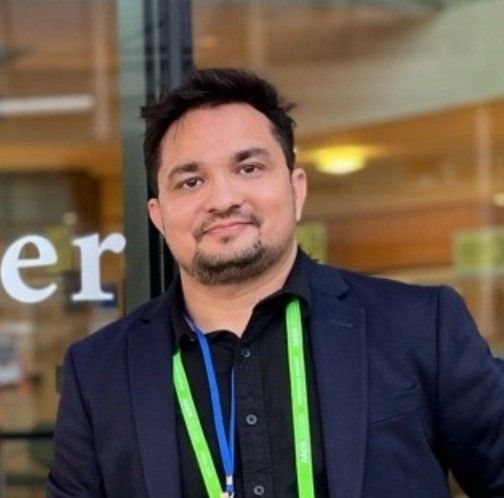
Ankit Mathur
Assistant Professor (Senior Grade)
ankit.mathur@jiit@ac.in
Biography

Dr. Ankit Mathur obtained his Ph.D. in Life Sciences (2017) from the Institute of Nuclear Medicine and Allied Sciences (INMAS), DRDO, Delhi, with a thesis on low-dose radiation sensitivity and cellular adhesion protein alterations during progressive stages of neoplastic transformation. He completed his M.Sc. in Biotechnology (2006–2008) from M.L.S. University, Udaipur, and B.Sc. in Chemistry, Botany, and Zoology (2003–2006) from M.D.S. University, Ajmer. He has held several prestigious fellowships, including the DBT Research Associateship (2019–2020) and Research Associate position (2021–2022) at Dr. B.R. Ambedkar Center for Biomedical Research, University of Delhi, the Maharishi Kanad Postdoctoral Fellowship (2022–2024) at the Institution of Eminence, University of Delhi, and the Senior Postdoctoral Fellowship (2024–2025) at the Institute of Plasma Research, Gujarat. His research focuses on cancer stem cell plasticity, AML diagnostics, and translational oncology.

Between 2018 and 2024, Dr. Mathur contributed extensively to postgraduate education at the University of Delhi, where he taught MSc Biomedical Science courses, guided students in research projects, and mentored dissertation work. His academic achievements have been recognized internationally; he was awarded the Global Scholar-in-Training Award (AACR, 2024), serves as an Ambassador for the European Association for Cancer Research (EACR), and is a member and co-chair of the Global Steering Committee (GSAC).

Research Highlights

Dr. Ankit Mathur is an internationally recognized cancer biologist whose work is unified by a central interest in cellular plasticity, the ability of cancer cells to alter their identity and behavior to drive progression, resistance, and relapse. Within this framework, his research focuses on Acute Myeloid Leukemia (AML), where he integrates stem cell biology and transcriptomics to uncover prognostic gene signatures and therapeutic vulnerabilities. He has developed a PCR-based prognostic panel for AML and pioneered studies on the natural compound esculetin, showing its potential to reprogram signaling pathways and induce differentiation in leukemic stem cells. His collaborative efforts extend to biomarker discovery in colorectal cancer and metabolic risk modeling in solid tumors, broadening the impact of his work beyond hematological malignancies. Earlier in his career, Dr. Mathur established innovative cellular models to investigate EMT/MET dynamics during tumorigenesis and co-developed a novel agarose overlay assay now recognized as a valuable tool for predictive assessment of radiosensitivity in radiotherapy patients. With over a decade of sustained contributions, prestigious international awards, and strong national and global collaborations, his work continues to shape the landscape of cancer diagnostics and therapeutic innovation.

Areas Of Interest
  • • Cellular Plasticity in Cancer
  • • Leukemic Stem Cell Biology
  • • Transcriptomics and Prognostic Signatures
  • • Differentiation Therapy Using Natural Compounds
  • • Radiation Biology and Therapeutic Response
Publications
  1. Mathur, A., Bareja, C., Mittal, M., Singh, A. and Saluja, D., 2024. Targeting Cellular Plasticity: Esculetin-Driven Reversion of Stemness and EMT Phenotype in Transforming Cells with Sequential p53/p73 Knockdowns.
  2. Mathur, A., Gangwar, A. and Saluja, D., 2023. Esculetin releases maturation arrest and induces terminal differentiation in leukemic blast cells by altering the Wnt signaling axes. BMC cancer, 23(1), p.387.
  3. Mathur, A., Kumar, A., Babu, B. and Chandna, S., 2018. In vitro mesenchymal-epithelial transition in NIH3T3 fibroblasts results in onset of low-dose radiation hypersensitivity coupled with attenuated connexin-43 response. Biochimica et Biophysica Acta (BBA)-General Subjects, 1862(3), pp.414-426.
  4. Mathur, A., Chinnadurai, V., Bhalla, P.J.S. and Chandna, S., 2023. Induction of epithelial-mesenchymal transition in thyroid follicular cells is associated with cell adhesion alterations and low-dose hyper-radiosensitivity. Tumor Biology, 45(1), pp.95-110.
  5. Bareja, C., Dwivedi, K., Uboveja, A., Mathur, A., Kumar, N. and Saluja, D., 2024. Identification and clinicopathological analysis of potential p73-regulated biomarkers in colorectal cancer via integrative bioinformatics. Scientific Reports, 14(1), p.9894.
  6. Khan, J., Bareja, C., Dwivedi, K., Mathur, A., Kumar, N. and Saluja, D., 2025. Identification and validation of a metabolic-related gene risk model predicting the prognosis of lung, colon, and breast cancers. Scientific Reports, 15(1), p.1374.
  7. Chandna, S., Dagur, R.S., Mathur, A., Natarajan, A.T., Harms-Ringdahl, M. and Haghdoost, S., 2014. Agarose overlay selectively improves macrocolony formation and radiosensitivity assessment in primary fibroblasts. International journal of radiation biology, 90(5), pp.401-406.