
Academic Experts
Academic Experts
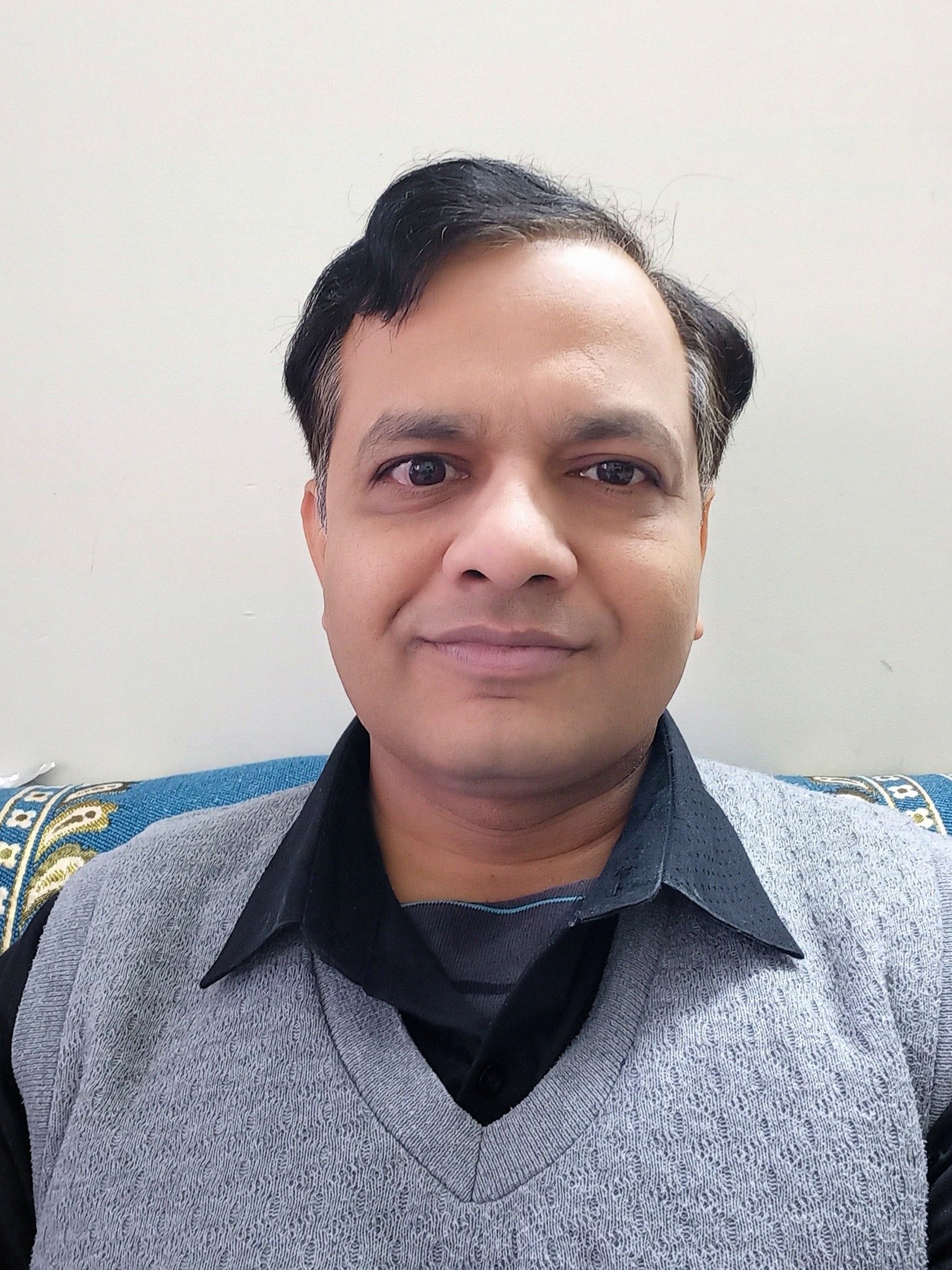
Dr. Manoj Tripathi
ASSISTANT PROFESSOR (SR GRADE)
manoj.tripathi@jiit.ac.in
Biography

Dr. Manoj Tripathi joined Jaypee Institute of Information Technology, Noida-India in 2018 and is currently working as Assistant Professor (Senior Grade). Before joining JIIT Noida he has worked in Pratap University Jaipur and Dev Bhoomi Institute of Technology-Dehradun. He completed his Ph.D. from University of Malaya, Kuala Lumpur Malaysia. In the field of ‘Energy Storage Materials’. He holds M. Tech. degree in Cryogenic Engineering from IIT Kharagpur and M.Sc. degree in Physics from Dr. Ram Manohar Lohia Avadh University, Faizabad.

Dr. Tripathi secured a fellowship under ‘High Impact Research Grant-Scheme’ offered by Ministry of Higher Education, Malaysia. He has developed academic courses for undergraduate students like ‘Waste to Energy Conversion’ and ‘Energy Storage Materials & Technologies’. He has developed ‘Thermophysical Characterization Laboratory’ and worked as Co-coordinator in ‘International Student Cell’ at Pratap University, Jaipur.

Dr. Tripathi has research collaborations with researchers at national and international universities. He is member of various committees to promote academic & research activities. He is member of the PyroAsia which is a forum to develop, discuss and collaborate in the field of pyrolysis. He is lifetime member of many scientific and professional societies working in the field of science and technology some of them are Materials Research Society of India (MRSI), Soft Material Research Society (SMRS), Scientific and Technical Research Association, Indian Laser Association (ILA), Society of Material Chemistry (SMS). Dr. Tripathi is the faculty advisor to the Optical Society of America (OSA) student chapter in JIIT-Noida.

Research Highlights

Dr. Manoj Tripathi has made significant and sustained contributions to science and technology, with his work spanning across advanced materials, energy storage, biomass valorization, bio-hydrogen production, clean energy, environmental remediation, and circular economy practices and sustainable environmental solutions. His scholarly output includes authored and edited books, high-impact journal articles, and book chapters in internationally recognized scientific volumes.

A major focus of Dr. Tripathi’s research work lies in biomass pyrolysis and the development of biochar and nanomaterials for energy and environmental applications. His pioneering studies on the microwave pyrolysis of agricultural residues have provided critical insights into their potential in energy generation, energy storage, carbon capture, and water treatment technologies.

Beyond biomass research, Dr. Tripathi has contributed to waste-to-energy systems, integrated approaches for wastewater treatment, hydrogen production, and CO2 capture. His research featured in highly reputed international journals like Fuel, Scientific reports, International Journal of Hydrogen energy, Biomass and Bioenergy, Applied Thermal Engineering, and the Journal of Analytical and Applied Pyrolysis endorse his expertise in process optimization, surface engineering, and the development of highly porous carbonaceous materials. Moreover, he is also working on polymer composites, biodegradable nanomaterials, and nanotechnology for electronic and biomedical applications.

His editorial leadership in the Elsevier volume “Nanomaterials for Carbon Dioxide Capture and Conversion Technologies” and his authored book “Fundamentals of Food Science and Technology” reflect his versatility and ability to bridge materials science with practical, real-world challenges.

Areas Of Interest
  • Biomass-derived supercapacitor electrodes
  • Production of Bio-hydrogen and bio-oil from biomass/waste
  • Plastic recycling for energy recovery
  • Latent heat based thermal energy storage systems
  • Polymer composites: Thermophysical and degradation properties
Publications
  1. A. Verma and M. Tripathi, “Dielectric characterization of mustard (Brassica Nigra) husk (MSH) by investigating biomass-microwave interaction for energy storage applications,” Biomass and Bioenergy, vol. 193, p. 107592, 2025, doi: 10.1016/j.biombioe.2025.107592.
  2. O. Khan et al., “Development of a novel energy efficient integrated system for concurrent waste water treatment, hydrogen production and carbon capture- A sustainable approach,” International Journal of Hydrogen Energy, Oct. 2024, doi: https://doi.org/10.1016/j.ijhydene.2024.10.069
  3. Jokhio, S. S. Qureshi, A. R. Sahito, M.-u.-N. Qureshi, I. A. Lashari, N. M. Mubarak, M. Tripathi, A. M. Al-Mohaimeed, and M. S. Elshikh, “Enhanced bio-methane and bio-hydrogen production using banana plant waste and sewage sludge through anaerobic co-digestion,” International Journal of Hydrogen Energy, vol. 48, no. 56, pp. 21360–21371, 2023, doi: 10.1016/j.ijhydene.2022.04.2
  4. A. Verma and M. Tripathi, “Interaction of Mustard Husk with microwave radiation: A study on dielectric properties and its variation with frequency,” Journal of Analytical and Applied Pyrolysis, vol. 173, p. 106090, 2023, doi: https://doi.org/10.1016/j.jaap.2023.106090
  5. N. M. Mubarak, J. N. Sahu, R. R. Karri, E. C. Abdullah, and M. Tripathi, “Effect of hydrogen flow rate on the synthesis of carbon nanofiber using microwave-assisted chemical vapour deposition with ferrocene as a catalyst,” International Journal of Hydrogen Energy, vol. 48, no. 56, pp. 21332–21344, 2023, doi: 10.1016/j.ijhydene.2022.08.17