

Academic Experts
Academic Experts
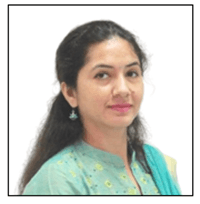
Dr. Parul Arora
ASSISTANT PROFESSOR (SENIOR GRADE)
parul.aroar@jiit.ac.in
Biography

Dr. Parul Arora is an Assistant Professor in the Department of Electronics and Communication Engineering at Jaypee Institute of Information Technology (JIIT), Noida, with over 22 years of experience in teaching, research, and academic leadership. She holds Ph.D degree from Netaji Subhas Institute of Technology, Delhi University in 2018. Dr. Arora has published many research papers in indexed journals, contributed to book chapters, edited a book and presented her work at several national and international conferences. Her research areas include signal processing, machine learning and pattern recognition. She has played a key role in developing E-Yantra Lab sponsored by Ministry of Education (MoE) under the National Mission for ICT in Education (NMEICT) program. She has also participated in Task Based Training (TBT) conducted by IIT, Bombay and won Grade –A award with cash prize. Dr. Arora has organized many workshops and faculty development programs in the area of AI, Machine learning and robotics. She has also served as a reviewer for many reputed journals like IEEE Transactions on Circuits and Systems for Video Technology etc.

Research Highlights

Dr. Parul Arora’s research focuses on model development for the application related to pattern recognition. She works mainly in the field of information set theory based model development. Her studies on information set theory based feature extraction and classification models have helped understand how human behavioral traits like human gait and physical modalities like palmprint and Iris can identify and verify humans in surveillance applications and many more. She has also worked on fabric defect patterns detection, Cardio-vascular diseases detection, skin cancer detection and seizure detection. Her research also covers robust image forgery detection, ensuring safety and long-term stability. Dr. Arora applied deep learning for applications in health informatics and medical image analysis, where customized wide residual networks (HRB-D) for skin lesion segmentation and sentiment analysis models for depression detection from social media data have both achieved state-of-the-art accuracy, advancing early diagnosis tools and demonstrating the applicability of AI across domains. She has also explored image processing and machine learning for automated photoluminescence detection. She has presented her research at IEEE international conferences and has received recognition for her technical contributions. Through the Giant project scheme at DRID, where she is the Co-Principal Investigator, she is working with EEG signals acquired from BioAMP and analyzing them for Wireless System Design. Her work demonstrates practical value in varied domains—from surveillance and authentication to medical diagnostics.

Areas Of Interest
  • 1. Image Processing
  • 2. Signal Processing
  • 3. Pattern Recognition
  • 4. Machine Learning
  • 5. Deep Learning
  • 6. Computer Vision
Publications
  1. P. Arora, M. Hanmandlu and S. Srivastava, “Gait based authentication using gait information image features” Pattern Recognition Letters, vol.68, pp.336-342, 2015 (Impact factor 3.3)
  2. P. Arora, S. Bhargava, S. Srivastava and M. Hanmandlu, “Multimodal Biometric System based on Information Set Theory and Refined scores”, Soft Computing, vol. 21, no.17, pp. 5133-5144, 2016 (Impact factor 2.5)
  3. P. Arora, S. Srivastava, M. Hanmandlu, and S. Bhargava, “Robust Authentication using Dorsal Hand Vein Images” IEEE Intelligent Systems, vol. 34, no. 2, pp. 25-35, 2018 (Impact factor 6.1)
  4. P. Arora, and M. Hanmandlu, "Detection of defects in fabrics using information set features in comparison with deep learning approaches", The Journal of The Textile Institute, vol. 113, no. 2 pp. 266-272, 2022. (Impact factor 1.5)
  5. D. Joshi, A. Kashyap, and P. Arora, "Optimized detection and localization of copy‐rotate‐move forgeries using biogeography‐based optimization algorithm." Journal of Forensic Sciences, 2025, doi.org/10.1111/1556-4029.70068. (Impact factor