
Academic Experts
Academic Experts
Vaibhav Rawoot
Assistant Professor (Senior Grade)
vaibhav.rawootATjiit.ac.in
Biography

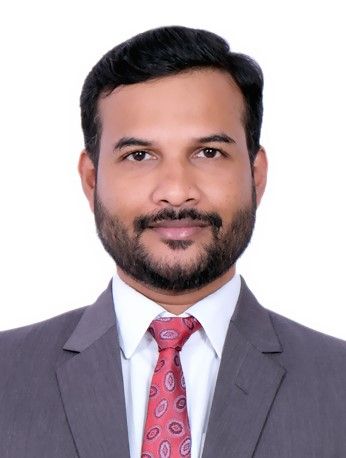
Dr. Vaibhav Rawoot is currently an Assistant Professor (Senior Grade) in the Department of Physics Materials Science and Engineering at Jaypee Institute of Information Technology (JIIT), Noida. He is a theoretical physicist with over 15 years of academic and research experience, specializing in Theoretical High Energy Physics. He earned his Ph.D. from the University of Mumbai in 2015, focusing on the topic of single spin asymmetries and quarkonium production. He has previously held postdoctoral and research positions at The Institute of Mathematical Sciences (IMSc), Chennai, and the University of Mumbai.

Dr. Rawoot’s research is rooted in the theory of Quantum Chromodynamics (QCD) and its applications in understanding the internal structure and spin dynamics of the proton. His core research areas include Transverse Momentum Dependent (TMD) parton distribution functions, TMD QCD evolution, Transverse single spin asymmetries, The Higgs boson and heavy quarkonium production, kT-factorization and small-x physics, Collider phenomenology, including the Electron-Ion Collider (EIC).

He is also actively exploring quantum entanglement in the decay of elementary particles, particularly as a probe of spin correlations and fragmentation functions in high-energy processes. Additionally, he is involved in the application of machine learning techniques, including deep neural networks, to extract parton distribution functions and analyze complex patterns in particle physics phenomenology.

Dr. Rawoot has published several research articles in international peer-reviewed journals such as Physical Review D and European Physical Journal C, Few Body Systems and has contributed to numerous conference proceedings. His international academic visits include reputed institutions such as CERN (Switzerland), NIKHEF (Netherlands), University of Pavia (Italy) and the University of Milan (Italy).

Beyond research, he is an active science communicator and astronomy enthusiast, regularly involved in public outreach, citizen science projects, astronomy observation events, and popular science lectures. He also mentors undergraduate and postgraduate students, integrating research-led teaching into the classroom.

Research Highlights

Dr. Vaibhav Rawoot’s research spans a broad range of topics in theoretical high energy physics, with a strong focus on Quantum Chromodynamics (QCD) and its phenomenological applications. He has extensively investigated transverse single spin asymmetries (TSSAs) in J/ψ and prompt photon production, contributing to a deeper understanding of spin-momentum correlations in hadrons. His work on the Sivers function and its evolution within transverse momentum-dependent (TMD) QCD frameworks has provided significant insights into the 3D internal structure of the proton, particularly in the context of spin-orbit interactions.

Dr. Rawoot has applied kT factorization techniques to study Higgs boson and heavy quarkonium production processes at the LHC, advancing the understanding of QCD dynamics in high-energy collisions. His recent research also explores quantum entanglement in the decay of elementary particles, using entanglement as a novel probe of spin and angular momentum correlations in high-energy processes. In parallel, he is leveraging deep neural networks (DNNs) and other machine learning approaches for the extraction of parton distribution functions and precision analysis of spin asymmetries, contributing to the development of data-driven methods in particle physics phenomenology.

His contributions extend to studies relevant to the upcoming Electron-Ion Collider (EIC), particularly in small-x gluon dynamics and spin-related observables. In addition to his primary research, Dr. Rawoot co-authored a data-driven epidemiological study on the dynamics of the COVID-19 pandemic in India, published in Chaos, Solitons & Fractals (2020). He has presented his work at numerous international conferences and visited leading research centers including CERN, NIKHEF, and the University of Milan.

Areas Of Interest
  • Perturbative Quantum Chromodynamics
  • Transverse momentum dependent parton distribution functions
  • kT factorization approach and Collider phenomenology
  • Deep neural network methods in particle physics phenomenology
  • Quantum information at High Energy Frontiers
  • Proton Spin Physics
Publications
  1. R. M. Godbole, A. Misra, A. Mukherjee and Vaibhav Rawoot, Sivers Effect and Transverse Single Spin Asymmetry in e+p↑ →e+J/ψ+X, Phys. Rev. D 85, 094013 (2012).
  2. R. M. Godbole, A. Misra, A. Mukherjee and Vaibhav Rawoot, Transverse Single Spin Asymmetry in e+p↑→e+J/ψ+X and Transverse Momentum Dependent Evolution of the Sivers Function, Phys. Rev. D 88, 014029 (2013).
  3. R. M. Godbole, A. Kaushik, A. Misra and Vaibhav Rawoot, Transverse single spin asymmetry in e+p↑→e+J/ψ+X and Q^2 evolution of Sivers function-II, Phys. Rev. D 91, no. 1, 014005 (2015)
  4. Rashidul Islam, Mukesh Kumar and Vaibhav Rawoot, kT-factorization approach to the Higgs boson production in ZZ∗→4l channel at the LHC, Eur.Phys.J. C79 (2019) no.3, 181.
  5. C Pai, A Bhaskar, Vaibhav Rawoot, “Investigating the dynamics of COVID-19 pandemic in India under lockdown” Chaos, Solitons and Fractals 138, 109988, 2020